- Home
- About Us
- Products
- Automatic Visual Inspection Machine
- Metal Hardware Inspection Line
- Automobile Parts Defect Detection System
- Automatic Visual Counting and Packaging Machines
- Medical Drugs and Consumables Optical Sorting Machine
- Rubber and Plastic CCD Automatic Visual Inspection Equipment
- HVAC and Refrigeration Parts Automatic Vision Inspection Equipment
- News
- Download
- Send Inquiry
- Contact Us
FAQ
Technical Principles
What is the working principle of vision inspection systems?
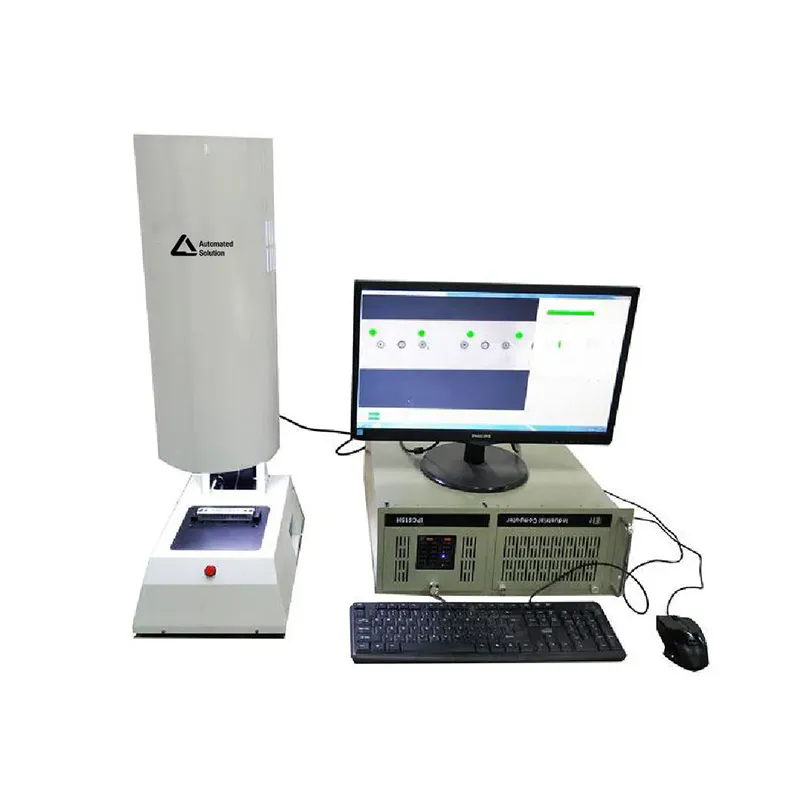
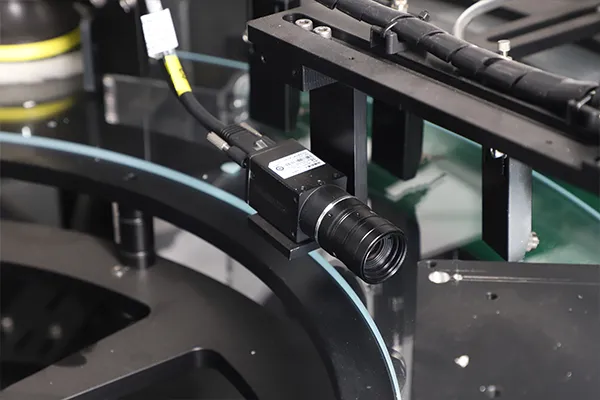
this inspection system uses an industrial camera to capture images, a light source for stable illumination, and image processing algorithms (e.g., edge detection, template matching) to analyze defects, dimensions, or positions, then outputs results to the control system.
How do vision inspection machines detect defects?
establishes a "standard" or "good" template, then compares real-time acquired images with the template. Through pixel-level difference analysis, feature extraction, or deep learning models, it identifies abnormal areas such as scratches, dirt, missing parts, deformation, etc., and determines whether they are defects based on preset thresholds.
What types of defects can vision inspection systems detect?
Defects include: surface scratches, pits, dirt, oil stains, printing errors, missing characters, poor welding points, component displacement, cracks, bubbles, color deviations, dimensional deviations, and assembly omissions.
How accurate are vision inspection systems?
Under ideal conditions (good lighting, stable environment, clear imaging), the detection accuracy of modern vision systems can exceed 99.5%. The actual accuracy is affected by factors such as image quality, algorithm robustness, product consistency, and environmental interference.
What is the difference between 2D and 3D vision inspection?
2D vision only acquires planar image information, suitable for detecting two-dimensional features such as color, patterns, and edges; 3D vision obtains the three-dimensional morphology of objects through laser triangulation, structured light, or binocular stereo vision, capable of measuring height, volume, surface contours, etc., suitable for complex geometric inspections.
How does deep learning enhance vision inspection?
Deep learning (such as Convolutional Neural Networks CNN) can automatically learn defect features without requiring manual rule design, especially suitable for complex, variable, or ambiguous defects that are difficult for traditional algorithms to handle (such as textile flaws, weld seam texture anomalies), improving generalization ability and detection rates.
What are the lighting requirements for vision inspection?
Lighting needs to be stable, uniform, and repeatable, capable of highlighting target features and suppressing interference. Common light sources include ring LED, backlight, coaxial light, linear light, etc. Different materials (reflective/transparent/absorptive) require matching dedicated lighting schemes.
How do vision inspection systems handle different materials?
For materials such as metal (highly reflective), plastic (semi-transparent), glass (fully transparent), rubber (low contrast), the system adjusts the light source type, angle, wavelength (such as infrared/ultraviolet), and image enhancement algorithms to ensure effective imaging and feature extraction.
What is the role of image processing in vision inspection?
Image processing is the core link, including image preprocessing (denoising, enhancement), feature extraction (edges, contours, regions), pattern matching, measurement calculations, and decision judgments, directly affecting detection speed and accuracy.
How do vision inspection systems integrate with production lines?
Through PLC, I/O signals, industrial Ethernet (such as Profinet, EtherNet/IP) or OPC UA protocols, it communicates with the production line to achieve triggering photography, receiving product information, outputting OK/NG signals, and eliminating defective products.
Product Application Category
What industries benefit from vision inspection systems?
our machine widely applied in industries such as electronics, automotive, pharmaceuticals, food and beverage, medical devices, packaging, textiles, aerospace, new energy (photovoltaics/batteries), and hardware manufacturing.
How are vision inspection systems used in the electronics industry?
It is used for PCB solder joint inspection, SMT component placement correction, chip packaging alignment, FPC flexible circuit board defect detection, and screen appearance inspection, ensuring the reliability of high-density, miniaturized products.
What applications exist in the automotive industry?
In the automotive industry, it is used for engine part dimensional measurement, safety airbag assembly verification, headlight sealing inspection, tire tread recognition, body weld seam inspection, and instrument panel character reading.
How do pharmaceutical companies use vision inspection?
In pharmaceuticals, it performs bottle label integrity checks, blister plate missing/defective particle detection, ampoule liquid foreign matter identification, batch number spray code verification, and capsule color and fill volume detection, meeting GMP compliance requirements.
What benefits do food and beverage companies gain?
In food and beverage, it achieves packaging seal integrity detection, date spray code recognition, foreign matter screening (e.g., metal, plastic fragments), product counting, and can body dent detection, ensuring food safety and reducing recall risks.
How are vision inspection systems used in quality control?
As a core tool for automated quality inspection, it replaces manual visual inspection, achieving 100% online full inspection, providing traceable data, supporting SPC statistical process control, and enhancing overall quality management levels.
What role do they play in automated manufacturing?
It is a key perception unit in intelligent manufacturing, providing real-time feedback for closed-loop control (e.g., robot guidance, adaptive processing), promoting "unmanned factories" and flexible production.
How do vision inspection systems help reduce waste?
Early defect detection can avoid subsequent ineffective processing; precise rejection of only defective products rather than entire batches reduces scrap rates; optimization of process parameters reduces raw material consumption.
What applications exist in the medical device industry?
n medical devices, it is used for syringe scale calibration, catheter end face flatness detection, surgical instrument assembly confirmation, and sterile packaging seal integrity verification, ensuring product safety and compliance.
How do they contribute to product safety?
Through high-precision, high-consistency detection, it prevents defective products from entering the market, avoiding safety accidents caused by missed inspections (e.g., pharmaceutical contamination, automotive part failure), protecting consumer rights.
Equipment performance
What are the key parameters of vision inspection systems?
Including resolution (pixels), frame rate (FPS), detection accuracy (μm), repeatability, depth of field, field of view (FOV), light source stability, processing speed, communication interface, etc. Or perform detection at a stationary workstation (e.g., turntable).
How fast can vision inspection systems operate?
The high-speed system can process thousands of pieces per minute (e.g., bottle cap inspection reaches 6000 pieces/minute), depending on the camera frame rate, image size, and algorithm complexity.
What is the resolution of vision inspection systems?
The resolution ranges from hundreds of thousands to hundreds of millions of pixels. For example, a 5-megapixel camera achieves a theoretical resolution of 0.02mm under a 100mm field of view.
How do vision inspection systems handle high-speed production?
High-frame-rate cameras, hardware acceleration (e.g., GPU/FPGA), optimized algorithms, and synchronized triggering mechanisms ensure image acquisition and processing without stopping the production line.
What is the repeatability of vision inspection systems?
A high-quality system achieves a repeatability of ±1μm or better, relying on mechanical stability, light source consistency, and algorithmic anti-interference capabilities.
How do vision inspection systems handle complex geometries?
3D visual reconstruction is used to reconstruct surface topography, or multi-angle 2D imaging combined with stitching algorithms is employed, along with CAD model comparison, to achieve detection of complex structures such as free-form surfaces and internal cavities.
What is the depth of field of vision inspection systems?
Depth of field is affected by lens focal length, aperture, and working distance. Ordinary lenses have a depth of field of a few millimeters, while telecentric lenses or 3D systems can extend it to the centimeter level.
How do vision inspection systems handle transparent materials?
Backlighting, dark-field illumination, polarized light, or infrared imaging is used to make the edges or internal defects of transparent objects visible; 3D laser scanning can also penetrate some transparent media.
What is the impact of environmental factors on vision inspection systems?
Temperature changes cause thermal expansion and contraction affecting precision; dust contaminates the lens; vibration causes image blur; strong light interferes with imaging. Protective covers, temperature control, and vibration damping measures are required to mitigate these issues.
How do vision inspection systems handle vibration and movement?
Short exposure time freezes motion, encoder synchronized triggering, image stabilization algorithms, or detection at a stationary workstation (e.g., turntable) are used.
Operation and Maintenance
How user-friendly are vision inspection systems?
Modern systems are commonly equipped with graphical user interfaces (GUI), supporting drag-and-drop process configuration, one-click calibration, and result visualization. Non-professional personnel can operate them after brief training.
What training is required for operators?
Basic training includes system startup/shutdown, routine calibration, alarm handling, and simple parameter adjustment; advanced training covers algorithm debugging, light source optimization, and fault diagnosis.
How do vision inspection systems handle software updates?
System upgrades are supported remotely or locally, typically via USB or network-pushed updates. Existing configurations are retained during updates, with some systems supporting hot updates without downtime.
What maintenance is required for vision inspection systems?
Preventive maintenance (recommended quarterly) includes:
Regular cleaning of lenses and light sources
Inspecting connection cables
Calibrating cameras and mechanical positioning
Backing up programs and parameters
How do vision inspection systems handle component failures?
The system features self-diagnostic capabilities, generating alerts for errors like "Camera Not Connected" or "Light Source Abnormal". Key components (e.g., cameras, controllers) support modular replacement.
What is the expected lifespan of vision inspection systems?
Lifespan Specifications:
Industrial-grade equipment: 8–10 years design life
Light sources: 20, 000–50, 000 hours operational life
Regular maintenance significantly extends service life
How do vision inspection systems handle data storage?
Data Management:
Local storage (SSD/HDD) or cloud upload to MES/SCADA systems
Archiving by time, batch, or product type
Meets traceability requirements
What cybersecurity measures are in place for vision inspection systems?
Security Protocols:
User permission management
Operation log auditing
Encrypted data transmission (HTTPS/TLS)
IEC 62443 industrial security compliance (select systems)
How do vision inspection systems handle power outages?
System Resilience:
UPS configuration enables safe shutdown
Automatic restoration of last configuration upon reboot
Re-triggering of interrupted tasks
What is the impact of dust and debris on vision inspection systems?
Environmental Requirements:
Prevent lens/light source obstruction to avoid:
Blurred images
Uneven illumination
Recommended solutions:
Enclosures with ≥ IP54 rating
Operation in cleanroom environments
Customization and compatibility
Can vision inspection systems be customized for specific applications?
The system offers comprehensive customization of optical solutions, mechanical structures, algorithm logic, and HMI based on product characteristics, defect types, and cycle time requirements
How do vision inspection systems integrate with existing equipment?
Industrial Connectivity
Seamless interfacing with PLCs, robots, and MES via Modbus TCP, Profinet, EtherCAT,
What communication protocols do vision inspection systems support?
Ethernet/IP, OPC UA, RS232/485, and TCP/IP Socket
SDK support for custom development and integration
How do vision inspection systems handle multi-language support?
Supports Chinese, English, Japanese, German, Spanish, and other languages, facilitating deployment in multinational enterprises.
What is the scalability of vision inspection systems?
Enables adding cameras, expanding inspection stations, and upgrading processing units to accommodate increased production capacity or new product introduction.
How do vision inspection systems handle future technology upgrades?
Utilizes a modular architecture allowing independent upgrades to algorithm libraries and hardware platforms; supports online AI model updates to maintain technological edge.
Can vision inspection systems be used for research and development?
Applicable for rapid validation during new product trials, process parameter optimization, and defect root cause analysis, shortening development cycles.
How do vision inspection systems handle different product sizes?
Applicable for rapid validation during new product trials, process parameter optimization, and defect root cause analysis, shortening development cycles.
What is the impact of product color on vision inspection systems?
Color impacts contrast. Solutions include using color cameras, wavelength-specific lighting (e.g., red light to highlight red defects), or multi-spectral imaging.
How do vision inspection systems handle product orientation?
Ensure detection of objects in any orientation through rotation-invariant feature matching, multi-angle template training, or robotic arm auto-alignment correction.
Industry solutions
What are the specific vision inspection solutions for the electronics industry?
SMT AOI (Automated Optical Inspection), semiconductor wafer alignment, smartphone casing appearance inspection, connector pin integrity verification.
How do vision inspection systems improve automotive manufacturing?
Achieves 100% online inspection of critical components, enhances assembly accuracy, reduces rework, and supports zero-defect manufacturing goals.
What vision inspection solutions are available for the pharmaceutical industry?
Blister pack leak detectors, vial inspection machines, label adherence verification systems, freeze-dried powder injection fill-level inspection.
How do vision inspection systems benefit food and beverage production?
Automatically rejects foreign objects, verifies packaging integrity, ensures date codes are legible, reducing food safety risks and brand reputation damage.
What are the vision inspection solutions for the medical device industry?
Guidewire tip forming inspection, syringe scale OCR recognition, sterile bag seal heat-seal width measurement.
How do vision inspection systems enhance consumer electronics manufacturing?
Enables micron-level appearance inspection (e.g., smartphone screen scratches) and precision assembly guidance (e.g., camera module alignment), safeguarding premium quality.
What vision inspection solutions are available for the aerospace industry?
Composite layup defect detection, turbine blade dimensional measurement, rivet installation status verification.
How do vision inspection systems improve textile manufacturing?
Real-time detection of broken yarns, stains, weft skew, and print misalignment to improve yield rates.
What are the vision inspection solutions for the packaging industry?
Carton stack quantity verification, flexible package seal integrity inspection, gift box foil stamping completeness check.
How do vision inspection systems benefit the renewable energy sector?
Photovoltaic cell micro-crack/contamination detection, lithium battery electrode burr/coating uniformity analysis, enhancing energy conversion efficiency and safety.
Quality and Compliance
What quality standards do vision inspection systems comply with?
Meets ISO 9001, IATF 16949 (Automotive), GMP (Pharmaceutical), FDA 21 CFR Part 11 (Electronic Records), and other relevant standards.
How do vision inspection systems ensure regulatory compliance?
Provides complete audit trails, electronic signatures, and tamper-proof data storage to satisfy compliance reviews.
What is the role of vision inspection systems in quality management?
Serves as an objective, quantifiable quality data source supporting quality decisions, continuous improvement, and customer audits.
How do vision inspection systems handle traceability requirements?
Binds inspection results (including images) per product to unique IDs, traceable to batches, work orders, and operators for full lifecycle tracking.
What are the consequences of poor quality in vision inspection?
Reduces false rejection costs (good products discarded) and prevents escapes (defective products missed) that trigger complaints, recalls, or safety incidents.
How do vision inspection systems contribute to continuous improvement?
Leverages defect data for root cause analysis (RCA), driving process refinements and supplier management.
What is the impact of vision inspection on customer satisfaction?
Enhances product consistency and reliability, minimizes post-sales issues, and strengthens brand trust.
How do vision inspection systems handle non-conforming products?
Triggers NG signals to activate audible/visual alarms, robotic arm rejection, or diversion to defective product channels.
What are the best practices for ensuring quality in vision inspection?
Implements regular calibration, standard sample verification, cross-validation (vs. manual sampling), and algorithm version control.
How do vision inspection systems support quality audits?
Enables rapid export of inspection reports, raw images, and system logs for internal/external audits.
Cost and Benefits
What is the cost of implementing vision inspection systems?
Approximately 14, 000–70, 000USD, while complex multi−camera 3D systems can exceed 140, 000 USD, depending on configuration.
What are the cost savings from using vision inspection systems?
Cuts manual inspection costs, reduces scrap rates, avoids customer penalties, and decreases quality dispute resolution expenses.
How do vision inspection systems provide a return on investment (ROI)?
Typically achieves payback within 6–18 months through improved yield rates, increased capacity, and enhanced quality stability for long-term gains.
What are the long-term benefits of vision inspection systems?
Elevates brand reputation, supports smart manufacturing transformation, and builds industrial big data assets.
How do vision inspection systems compare to manual inspection in terms of cost?
Long-term Economics, Higher initial investment, but delivers lower per-unit inspection costs over time while eliminating fatigue and subjectivity.
What are the financial implications of not using vision inspection systems?
High escape rates may cause batch recalls, customer attrition, production bottlenecks, and inability to meet premium-order requirements.
How do vision inspection systems impact operational costs?
Reduces reliance on QC labor, minimizes rework/scrap, and optimizes inventory (lower safety stock enabled by consistent quality).
What are the hidden costs of vision inspection systems?
Includes training, maintenance, downtime debugging, and algorithm development—budget allocation required during project planning.
How do vision inspection systems contribute to profitability?
Generates value by boosting yields, enabling high-margin product manufacturing, and securing quality-sensitive customer orders.
What are the economic benefits of vision inspection systems?
Delivers comprehensive benefits across four dimensions: cost reduction, efficiency gain, quality enhancement, and risk control, directly contributing to corporate profitability.
Deployment and Implementation
What is the process for deploying vision inspection systems?
Requirement Analysis → Solution Design → Optical Validation → Software Development → On-site Installation → Integration Testing → Personnel Training → Delivery & Acceptance.
How long does it take to implement vision inspection systems?
Standard projects: 4–8 weeks; complex custom projects: 2–6 months.
What are the challenges in deploying vision inspection systems?
Retrofitting without stopping production, product diversity, environmental constraints, internal client coordination.
How do vision inspection systems handle site-specific requirements?
Explosion-proof, waterproof, high-temperature resistant, and cleanroom-compatible versions available for extreme conditions.
What support is available during the deployment of vision inspection systems?
On-site engineering assistance, remote troubleshooting, phased reviews, and documentation delivery.
How do vision inspection systems handle scalability during deployment?
Pre-reserved hardware interfaces and software architecture redundancy for functional/station expansions.
What are the best practices for deploying vision inspection systems?
Early involvement in line planning, validation with real samples, detailed First Article Inspection (FAI) criteria.
How do vision inspection systems impact production during deployment?
Deployment during weekends/production breaks to avoid operational interference.
What are the key considerations when deploying vision inspection systems?
Product characteristics, takt time requirements, spatial limits, communication protocols, maintainability, scalability.
How do vision inspection systems handle post-deployment support?
Warranty coverage, remote diagnostics, periodic maintenance, software updates, spare parts supply.
Case studies and customer feedback
What case studies demonstrate the effectiveness of vision inspection systems?
Mobile OEM case: AOI reduced screen escape rates from 0.5% to 0.01%.
Pharma case: Achieved 100% automated blister pack leak detection.
How do vision inspection systems perform in real-world applications?
Systems run autonomously for months with near-zero intervention, outperforming manual consistency.
What feedback have customers provided about vision inspection systems?
Widely recognized for stabilizing quality and cutting labor costs; clients seek further operational simplification.
How do vision inspection systems compare to competitors in the market?
Algorithm robustness, integration efficiency, rapid local service response.
How do vision inspection systems handle customer-specific challenges?
Joint development, on-site Proof-of-Concept (POC), tailored optical solutions for unique challenges.
What are the success stories of vision inspection systems?
Serving high-demand sectors: consumer electronics, new-energy batteries, biopharma (including Fortune 500 clients).
How do vision inspection systems contribute to customer success?
Delivering comprehensive quality solutions—not just equipment—to become strategic quality partners.
What are the future trends in vision inspection systems?
AI integration, 3D adoption, edge computing deployment, cloud platform management, digital twin convergence